Monday, November 28, 2011

Ordinary People

  • ISBN13: 9780140065176
  • Condition: New
  • Notes: BRAND NEW FROM PUBLISHER! 100% Satisfaction Guarantee. Tracking provided on most orders. Buy with Confidence! Millions of books sold!
Money Shot chronicles the African American porn industry's steady rise to the mainstream. Lawrence Ross, a prominent journalist and lecturer, details a year in the life of porn star Lexington Steele, whose eleven-inch penis and $75,000 per-movie-fee made him one of the most famous figures in the porn industry. Beginning and ending with Lexington Steele as the book's narrative thread, Ross conducts hundreds of interviews with college professors, industry insiders, and porn stars themselves, providing an insider's view of the often dangerous and disheartening reality of the black porn industry. His research uncovers a world fraught with sexual and racial politics. He describes an AIDS crisis that ! threatens the lives and careers of several black porn stars, the racism that implicitly prohibits interracial sex scenes in porn films, the moral implications of black female porn stars working as escorts to wealthy African Americans, and much more. Money Shot humanizes those who participate in a largely inhumane occupationâ€"it is a cautionary tale for those who thought that what they are seeing on the screen is simply sex.
The classic depiction of the harsh realities of American life, the dark side of the American Dream, and one man's doomed pursuit of love and success...

"Mr. Dreiser is not imitative and belongs to no school. He is at heart a mysticist and a fatalist, though using the realistic method. He is, on the evidence of this novel alone, a power."-The New York Times Book ReviewIn this acclaimed biographical novel, Irving Stone brings to life the tender and poignant love story of Rachel and Andrew Jackson. "Beyond any doubt one of the great rom! ances of all time." -- The Saturday Review of LiteratureDaniell e Steel celebrates families of every stripe in her compelling new novelâ€"a tale of three very different couples who struggle and survive, love, laugh, and learn to take life…

Coco Barrington was born into a legendary Hollywood family, her last name loaded with expectations. Her mother is a mega-bestselling author who writes under the name of Florence Flowersâ€"and her sister, Jane, is one of Hollywood’s top producers. They’re not your typical family by any means.…Jane has lived with her partner, Liz, for ten years, in a solid, loving relationship. Florence, widowed but still radiant, has just begun a secret romance with a man twenty-four years her junior. And Coco, a law school dropout and the family black sheep, works as a dog walker, having fled life in the spotlight for the artsy northern California beach town of Bolinas.

But when Coco reluctantly agrees to dog-sit in Jane’s luxurious home, she soon discovers how much things can change in just a m! atter of days.…It turns out Jane’s house comes complete with an unexpected houseguest: Leslie Baxter, a dashing but down-to-earth British actor who’s fleeing a psycho ex-girlfriend. Their worlds couldn’t be more different. The attraction couldn’t be more immediate.

Suddenly Coco is seeing things differently: Leslie is not just a celebrity, he’s a single dad to an adorable six-year-old girl. Her mother is not just a self-centered walking advertisement for great cosmetic surgery, she’s a woman in love, with vulnerability and new insight. And Jane and Liz are about to take the bravest plunge of allâ€"into parenthood. As Coco contemplates a future with one of Hollywood’s hottest stars, as her mother and sister settle into their lives, old wounds are healed and new familes are formedâ€"some traditional, some not so traditional, but all bonded by love.

With wit and intelligence, Danielle Steel’s new novel explores love in all its guises, taking! us into the lives of three unusual but wonderfully real couple s. Funny, sexy, and wise, One Day at a Time is at once moving, thought provoking, and utterly impossible to put down.Describes a youth's breakdown and recovery and how it affects his family.

The Emperor's New Groove - The New Groove Edition

  • Hilarious comedy rules in Disney's THE EMPEROR'S NEW GROOVE! There's something for everyone in this hip, funny movie with its dynamo cast, distinctive style, and great music -- featuring the Academy Award(R)-nominated song, "My Funny Friend And Me" (2000, Best Original Song). Emperor Kuzco (voiced by David Spade) is turned into a llama by his devious advisor, Yzma (Eartha Kitt), and he
If you liked ALADDIN, you'll love Disney's THE EMPEROR'S NEW GROOVE, where outrageous comedy rules! Audiences and critics alike raved about this hilarious animated adventure. "Ebert & Roeper And The Movies" gave it "Two Thumbs Up." Faster than you can say "Boom, baby," arrogant Emperor Kuzco is turned into a llama by his devious advisor, Yzma, and her hunky henchman, Kronk, who want to rid the kingdom of this beast of burden. Now the ruler who once had it all must form an unlikely alliance with a pleasant peasa! nt named Pacha. Together, Kuzco and Pacha must overcome their differences as they embark on a hilarious, "groovy" adventure that will have you howling with laughter.Originally developed as an epic called Kingdom of the Sun, The Emperor's New Groove lost scale and most of Sting's song score (some of which can be heard on the soundtrack) on its way to the screen. The end result is the lightest Disney film in many a moon, a joyous romp akin to Aladdin in its quotient of laughs for kids and adults. The original story centers on the spoiled teenage emperor Kuzco (David Spade), who enjoys getting the best of his Aztecan subjects. When he fires Yzma (Eartha Kitt), his evil sorceress, she seeks revenge and turns Kuzco into a llama with the help of her hunk of the month, a lunk named Kronk (Patrick Warburton). Alone in the jungle, the talking llama is befriended by Pacha (John Goodman), who has just been told to vacate his pastoral home by the human Kuzco. What'! s an ego to do? That's pretty much the story and the character! s--simpl e, direct, fun--a Disney film on a diet. For any fan of the acidic humor of Spade, this is essential viewing. As narrator of his tale, Kuzco uses a sarcastic tone to keep the story jumping with plenty of fun asides (he even "stops" the film at one point to make sure you know the story is about him). Even better is character actor Warburton (Elaine's stuck-up boyfriend on Seinfeld), who steals every scene as the dim-witted, but oh-so-likable Kronk. There's even a delicious Tom Jones number that starts the film off with a bang. --Doug Thomas If you liked ALADDIN, you'll love Disney's THE EMPEROR'S NEW GROOVE, where outrageous comedy rules! Audiences and critics alike raved about this hilarious animated adventure. "Ebert & Roeper And The Movies" gave it "Two Thumbs Up." Faster than you can say "Boom, baby," arrogant Emperor Kuzco is turned into a llama by his devious advisor, Yzma, and her hunky henchman, Kronk, who want to rid the kingdom of this beast of ! burden. Now the ruler who once had it all must form an unlikely alliance with a pleasant peasant named Pacha. Together, Kuzco and Pacha must overcome their differences as they embark on a hilarious, "groovy" adventure that will have you howling with laughter.Originally developed as an epic called Kingdom of the Sun, The Emperor's New Groove lost scale and most of Sting's song score (some of which can be heard on the soundtrack) on its way to the screen. The end result is the lightest Disney film in many a moon, a joyous romp akin to Aladdin in its quotient of laughs for kids and adults. The original story centers on the spoiled teenage emperor Kuzco (David Spade), who enjoys getting the best of his Aztecan subjects. When he fires Yzma (Eartha Kitt), his evil sorceress, she seeks revenge and turns Kuzco into a llama with the help of her hunk of the month, a lunk named Kronk (Patrick Warburton). Alone in the jungle, the talking llama is befriended by Pach! a (John Goodman), who has just been told to vacate his pastora! l home b y the human Kuzco. What's an ego to do? That's pretty much the story and the characters--simple, direct, fun--a Disney film on a diet. For any fan of the acidic humor of Spade, this is essential viewing. As narrator of his tale, Kuzco uses a sarcastic tone to keep the story jumping with plenty of fun asides (he even "stops" the film at one point to make sure you know the story is about him). Even better is character actor Warburton (Elaine's stuck-up boyfriend on Seinfeld), who steals every scene as the dim-witted, but oh-so-likable Kronk. There's even a delicious Tom Jones number that starts the film off with a bang. --Doug Thomas

The Dolphin: Story of a Dreamer

  • Features include: -MPAA Rating: PG -Format: DVD-Runtime: 88 minutes
Inspired by a true story, Dolphin Tale is about courage, ingenuity, and never giving up. Sawyer (Nathan Gamble) is a young boy who's struggling with school and doesn't have many friends other than his cousin Kyle (Austin Stowell). When Kyle, a star swimmer, joins the army to earn money for college and is called to active duty, it looks like Sawyer is destined to spend his summer alone tinkering in the garage and attending summer school. Sawyer stumbles upon a dolphin that's been severely injured, becomes fascinated by dolphins, and is suddenly intellectually engaged like never before. In spite of his shyness, he forms a friendship with marine rescue doctor Clay (Harry Connick Jr.) and his daughter Hazel (Cozi Zuehlsdorff) and, more importantly, a special and very powerful bond with the rescued dolphin, who's dubbed Wi! nter. As the newly formed team struggles to save Winter's life and ensure her continued safety, financial concerns, an accident that leaves Kyle crippled for life, and a hurricane all seem to join forces against them. In the end, it is Sawyer's determination, coupled with a little bit of luck and a lot of ingenuity from an army doctor (Morgan Freeman) who specializes in prosthetics, that helps make each member of the team, including Kyle and Winter, whole again. The talented cast does a great job of creating completely believable characters, but Gamble, Zuehlsdorff, Connick, Freeman, Stowell, and of course Winter, who plays herself, all deserve special mention. While the story of an injured animal rescued and rehabilitated has certainly been told before, this film is emotionally powerful and will absolutely captivate children and adults alike. (Ages 5 and older) --Tami HoriuchiInspired by a true story, Dolphin Tale is about courage, ingenuity, and never giving! up. Sawyer (Nathan Gamble) is a young boy who's struggling wi! th schoo l and doesn't have many friends other than his cousin Kyle (Austin Stowell). When Kyle, a star swimmer, joins the army to earn money for college and is called to active duty, it looks like Sawyer is destined to spend his summer alone tinkering in the garage and attending summer school. Sawyer stumbles upon a dolphin that's been severely injured, becomes fascinated by dolphins, and is suddenly intellectually engaged like never before. In spite of his shyness, he forms a friendship with marine rescue doctor Clay (Harry Connick Jr.) and his daughter Hazel (Cozi Zuehlsdorff) and, more importantly, a special and very powerful bond with the rescued dolphin, who's dubbed Winter. As the newly formed team struggles to save Winter's life and ensure her continued safety, financial concerns, an accident that leaves Kyle crippled for life, and a hurricane all seem to join forces against them. In the end, it is Sawyer's determination, coupled with a little bit of luck and a lot of ingenu! ity from an army doctor (Morgan Freeman) who specializes in prosthetics, that helps make each member of the team, including Kyle and Winter, whole again. The talented cast does a great job of creating completely believable characters, but Gamble, Zuehlsdorff, Connick, Freeman, Stowell, and of course Winter, who plays herself, all deserve special mention. While the story of an injured animal rescued and rehabilitated has certainly been told before, this film is emotionally powerful and will absolutely captivate children and adults alike. (Ages 5 and older) --Tami Horiuchi
Based on the heartwarming 3-D movie premiering September 16, 2011!


When a dolphin named Winter loses her tail in a crab trap, it’s up to a young boy named Sawyer and the staff at Clearwater Marine Aquarium to help her survive against the odds. Sawyer is quiet at first, but his special connection with Winter soon brings him out of his shell. One day, after visiting his cousin at a! n army hospital, Sawyer gets an idea to have a doctor there ma! ke Winte r a prosthetic tail.This proposal inspires the staff at the aquarium and fills Sawyer with the hope that Winter may one day swim again.

With 8-page full color insert!

Inspired by a true story, Dolphin Tale is about courage, ingenuity, and never giving up. Sawyer (Nathan Gamble) is a young boy who's struggling with school and doesn't have many friends other than his cousin Kyle (Austin Stowell). When Kyle, a star swimmer, joins the army to earn money for college and is called to active duty, it looks like Sawyer is destined to spend his summer alone tinkering in the garage and attending summer school. Sawyer stumbles upon a dolphin that's been severely injured, becomes fascinated by dolphins, and is suddenly intellectually engaged like never before. In spite of his shyness, he forms a friendship with marine rescue doctor Clay (Harry Connick Jr.) and his daughter Hazel (Cozi Zuehlsdorff) and, more importantly, a special and very powerful bond with t! he rescued dolphin, who's dubbed Winter. As the newly formed team struggles to save Winter's life and ensure her continued safety, financial concerns, an accident that leaves Kyle crippled for life, and a hurricane all seem to join forces against them. In the end, it is Sawyer's determination, coupled with a little bit of luck and a lot of ingenuity from an army doctor (Morgan Freeman) who specializes in prosthetics, that helps make each member of the team, including Kyle and Winter, whole again. The talented cast does a great job of creating completely believable characters, but Gamble, Zuehlsdorff, Connick, Freeman, Stowell, and of course Winter, who plays herself, all deserve special mention. While the story of an injured animal rescued and rehabilitated has certainly been told before, this film is emotionally powerful and will absolutely captivate children and adults alike. (Ages 5 and older) --Tami HoriuchiInspired by a true story, Dolphin Tale is about c! ourage, ingenuity, and never giving up. Sawyer (Nathan Gamble)! is a yo ung boy who's struggling with school and doesn't have many friends other than his cousin Kyle (Austin Stowell). When Kyle, a star swimmer, joins the army to earn money for college and is called to active duty, it looks like Sawyer is destined to spend his summer alone tinkering in the garage and attending summer school. Sawyer stumbles upon a dolphin that's been severely injured, becomes fascinated by dolphins, and is suddenly intellectually engaged like never before. In spite of his shyness, he forms a friendship with marine rescue doctor Clay (Harry Connick Jr.) and his daughter Hazel (Cozi Zuehlsdorff) and, more importantly, a special and very powerful bond with the rescued dolphin, who's dubbed Winter. As the newly formed team struggles to save Winter's life and ensure her continued safety, financial concerns, an accident that leaves Kyle crippled for life, and a hurricane all seem to join forces against them. In the end, it is Sawyer's determination, coupled with a lit! tle bit of luck and a lot of ingenuity from an army doctor (Morgan Freeman) who specializes in prosthetics, that helps make each member of the team, including Kyle and Winter, whole again. The talented cast does a great job of creating completely believable characters, but Gamble, Zuehlsdorff, Connick, Freeman, Stowell, and of course Winter, who plays herself, all deserve special mention. While the story of an injured animal rescued and rehabilitated has certainly been told before, this film is emotionally powerful and will absolutely captivate children and adults alike. (Ages 5 and older) --Tami Horiuchi
The story that inspired the new MAJOR MOTION PICTURE!


When Winter was a baby, she was rescued from a crab trap, her tail seriously damaged, and rushed to Clearwater Marine Aquarium. Winter survived, but eventually her tail fell off. Then Winter received a prosthetic tail. It was very challenging but now Winter is thriving and using her new tail wi! th great command. Every year, thousands of visitors travel to ! visit Wi nter who has become an inspiration to adults and children alike, especially to children who are amputees themselves. And now Winter's story is soon to be a major motion picture starring Morgan Freeman, Ashley Judd, and Harry Connick Jr.!


Features include:

•MPAA Rating: PG
•Format: DVD
•Runtime: 88 minutes

Babe (Widescreen Special Edition)

  • Features include: -MPAA Rating: G -Format: DVD-Runtime: 89 minutes
In Babel, a tragic incident involving an American couple in Morocco sparks a chain of events for four families in different countries throughout the world. In the struggle to overcome isolation, fear, and displacement, each character discovers that it is family that ultimately provides solace.

In the remote sands of the Moroccan desert, a rifle shot rings out-- detonating a chain of events that will link an American tourist couple’s frantic struggle to survive, two Moroccan boys involved in an accidental crime, a nanny illegally crossing into Mexico with two American children, and a Japanese teen rebel whose father is sought by the police in Tokyo. Separated by clashing cultures and sprawling distances, each of these four disparate groups of people are nevertheless hurtling towards a shared destiny of isolation and! grief. In the course of just a few days, they will each face the dizzying sensation of becoming profoundly lost â€" lost in the desert, lost to the world, lost to themselves â€" as they are pushed to the farthest edges of confusion and fear as well as to the very depths of connection and love.

In this mesmerizing, emotional film that was shot in three continents and four languages â€" and traverses both the deeply personal and the explosively political -- acclaimed director Alejandro González Iñárritu (21 Grams, Amores Perros) explores with shattering realism the nature of the barriers that seem to separate humankind. In doing so, he evokes the ancient concept of Babel and questions its modern day implications: the mistaken identities, misunderstandings and missed chances for communication that-- though often unseen-- drive our contemporary lives. Brad Pitt, Cate Blanchett, Gael García Bernal, Kôji Yakusho, Adriana Barraza and Rinko Kikuchi lead an internati! onal ensemble of actors and non-professional actors from Moroc! co, Tiju ana and Tokyo, who enrich Babel’s take on cultural diversity and enhance its powerful examination of the links and frontiers between and within us.Brilliantly conceived, superbly directed, and beautifully acted, Babel is inarguably one of the best films of 2006. Director Alejandro González Iñárritu and his co-writer, Guillermo Arriaga (the two also collaborated on Amores Perros and 21 Grams) weave together the disparate strands of their story into a finely hewn fabric by focusing on what appear to be several equally incongruent characters: an American (Brad Pitt) touring Morocco with his wife (Cate Blanchett) become the focus of an international incident also involving a hardscrabble Moroccan farmer (Mustapha Rachidi) struggling to keep his two young sons in line and his family together. A San Diego nanny (Adriana Barraza), her employers absent, makes the disastrous decision to take their kids with her to a wedding in Mexico. And a deaf-mute Japanes! e teen (the extraordinary Rinko Kikuchi) deals with a relationship with her father (Koji Yakusho) and the world in general that's been upended by the death of her mother. It is perhaps not surprising, or particularly original, that a gun is the device that ties these people together. Yet Babel isn't merely about violence and its tragic consequences. It's about communication, and especially the lack of it--both intercultural, raising issues like terrorism and immigration, and intracultural, as basic as husbands talking to their wives and parents understanding their children. Iñárritu's command of his medium, sound and visual alike, is extraordinary; the camera work is by turns kinetic and restrained, the music always well matched to the scenes, the editing deft but not confusing, and the film (which clocks in at a lengthy 143 minutes) is filled with indelible moments. Many of those moments are also pretty stark and grim, and no will claim that all of this leads to a! "happy" ending, but there is a sense of reconciliation, perha! ps even resolution. "If You Want to be Understood... Listen," goes the tagline. And if you want a movie that will leave you thinking, Babel is it. --Sam Graham

Beyond Babel


Other Interweaving Storylines on DVD

Other DVDs by Director Alejandro González Iñárritu

Why We Love Cate Blanchett

Stills from Babel (click for larger image)


In Babel, a tragic incident involving an American couple in Morocco sparks a chain of events for four famili! es in different countries throughout the world. In the struggl! e to ove rcome isolation, fear, and displacement, each character discovers that it is family that ultimately provides solace.

In the remote sands of the Moroccan desert, a rifle shot rings out-- detonating a chain of events that will link an American tourist couple’s frantic struggle to survive, two Moroccan boys involved in an accidental crime, a nanny illegally crossing into Mexico with two American children, and a Japanese teen rebel whose father is sought by the police in Tokyo. Separated by clashing cultures and sprawling distances, each of these four disparate groups of people are nevertheless hurtling towards a shared destiny of isolation and grief. In the course of just a few days, they will each face the dizzying sensation of becoming profoundly lost â€" lost in the desert, lost to the world, lost to themselves â€" as they are pushed to the farthest edges of confusion and fear as well as to the very depths of connection and love.

In this mesmerizing, emotional film! that was shot in three continents and four languages â€" and traverses both the deeply personal and the explosively political -- acclaimed director Alejandro González Iñárritu (21 Grams, Amores Perros) explores with shattering realism the nature of the barriers that seem to separate humankind. In doing so, he evokes the ancient concept of Babel> and questions its modern day implications: the mistaken identities, misunderstandings and missed chances for communication that-- though often unseen-- drive our contemporary lives. Brad Pitt, Cate Blanchett, Gael García Bernal, Kôji Yakusho, Adriana Barraza and Rinko Kikuchi lead an international ensemble of actors and non-professional actors from Morocco, Tijuana and Tokyo, who enrich Babel’s take on cultural diversity and enhance its powerful examination of the links and frontiers between and within us.Brilliantly conceived, superbly directed, and beautifully acted, Babel is inarguably one of the best! films of 2006. Director Alejandro González Iñárritu and hi! s co-wri ter, Guillermo Arriaga (the two also collaborated on Amores Perros and 21 Grams) weave together the disparate strands of their story into a finely hewn fabric by focusing on what appear to be several equally incongruent characters: an American (Brad Pitt) touring Morocco with his wife (Cate Blanchett) become the focus of an international incident also involving a hardscrabble Moroccan farmer (Mustapha Rachidi) struggling to keep his two young sons in line and his family together. A San Diego nanny (Adriana Barraza), her employers absent, makes the disastrous decision to take their kids with her to a wedding in Mexico. And a deaf-mute Japanese teen (the extraordinary Rinko Kikuchi) deals with a relationship with her father (Koji Yakusho) and the world in general that's been upended by the death of her mother. It is perhaps not surprising, or particularly original, that a gun is the device that ties these people together. Yet Babel isn't merely about viole! nce and its tragic consequences. It's about communication, and especially the lack of it--both intercultural, raising issues like terrorism and immigration, and intracultural, as basic as husbands talking to their wives and parents understanding their children. Iñárritu's command of his medium, sound and visual alike, is extraordinary; the camera work is by turns kinetic and restrained, the music always well matched to the scenes, the editing deft but not confusing, and the film (which clocks in at a lengthy 143 minutes) is filled with indelible moments. Many of those moments are also pretty stark and grim, and no will claim that all of this leads to a "happy" ending, but there is a sense of reconciliation, perhaps even resolution. "If You Want to be Understood... Listen," goes the tagline. And if you want a movie that will leave you thinking, Babel is it. --Sam Graham

Beyond Babel


Other Interweaving Storylines on DVD

Other DVDs by Director Alejandro González Iñárritu

Why We Love Cate Blanchett

Stills from Babel (click for larger image)

!


In Babel, a tragic incident involving an American couple in Morocco sparks a chain of events for four families in different countries throughout the world. In the struggle to overcome isolation, fear, and displacement, each character discovers that it is family that ultimately provides solace.

In the remote sands of the Moroccan desert, a rifle shot rings out-- detonating a chain of events that will link an American tourist co! uple’s frantic struggle to survive, two Moroccan boys involv! ed in an accidental crime, a nanny illegally crossing into Mexico with two American children, and a Japanese teen rebel whose father is sought by the police in Tokyo. Separated by clashing cultures and sprawling distances, each of these four disparate groups of people are nevertheless hurtling towards a shared destiny of isolation and grief. In the course of just a few days, they will each face the dizzying sensation of becoming profoundly lost â€" lost in the desert, lost to the world, lost to themselves â€" as they are pushed to the farthest edges of confusion and fear as well as to the very depths of connection and love.

In this mesmerizing, emotional film that was shot in three continents and four languages â€" and traverses both the deeply personal and the explosively political -- acclaimed director Alejandro González Iñárritu (21 Grams, Amores Perros) explores with shattering realism the nature of the barriers that seem to separate humankind. In doing so, he evok! es the ancient concept of Babel> and questions its modern day implications: the mistaken identities, misunderstandings and missed chances for communication that-- though often unseen-- drive our contemporary lives. Brad Pitt, Cate Blanchett, Gael García Bernal, Kôji Yakusho, Adriana Barraza and Rinko Kikuchi lead an international ensemble of actors and non-professional actors from Morocco, Tijuana and Tokyo, who enrich Babel’s take on cultural diversity and enhance its powerful examination of the links and frontiers between and within us.Brilliantly conceived, superbly directed, and beautifully acted, Babel is inarguably one of the best films of 2006. Director Alejandro González Iñárritu and his co-writer, Guillermo Arriaga (the two also collaborated on Amores Perros and 21 Grams) weave together the disparate strands of their story into a finely hewn fabric by focusing on what appear to be several equally incongruent characters: an America! n (Brad Pitt) touring Morocco with his wife (Cate Blanchett) b! ecome th e focus of an international incident also involving a hardscrabble Moroccan farmer (Mustapha Rachidi) struggling to keep his two young sons in line and his family together. A San Diego nanny (Adriana Barraza), her employers absent, makes the disastrous decision to take their kids with her to a wedding in Mexico. And a deaf-mute Japanese teen (the extraordinary Rinko Kikuchi) deals with a relationship with her father (Koji Yakusho) and the world in general that's been upended by the death of her mother. It is perhaps not surprising, or particularly original, that a gun is the device that ties these people together. Yet Babel isn't merely about violence and its tragic consequences. It's about communication, and especially the lack of it--both intercultural, raising issues like terrorism and immigration, and intracultural, as basic as husbands talking to their wives and parents understanding their children. Iñárritu's command of his medium, sound and visual alike, is e! xtraordinary; the camera work is by turns kinetic and restrained, the music always well matched to the scenes, the editing deft but not confusing, and the film (which clocks in at a lengthy 143 minutes) is filled with indelible moments. Many of those moments are also pretty stark and grim, and no will claim that all of this leads to a "happy" ending, but there is a sense of reconciliation, perhaps even resolution. "If You Want to be Understood... Listen," goes the tagline. And if you want a movie that will leave you thinking, Babel is it. --Sam Graham

Beyond Babel


Other Interweaving Storylines on DVD

Other DVDs by Director! Alejand ro González Iñárritu

Why We Love Cate Blanchett

Stills from Babel (click for larger image)


In Babel, a tragic incident involving an American couple in Morocco sparks a chain of events for four families in different countries throughout the world. In the struggle to overcome isolation, fear, and displacement, each character discovers that it is family that ultimately provides solace. In the remote sands of the Moroccan desert, a rifle shot rings out â€" detonating a chain of events that will link an American tourist couple’s frantic struggle to survive, two Moroccan boys involved in an accidental crime, a nanny illegally crossing into Mexico with two American children and a Japanese teen rebel whose father is sought by the police in Tokyo. Separated by clashing cultures and sprawling distances, each of these four disparate groups of people are n! evertheless hurtling towards a shared destiny of isolation and! grief. In the course of just a few days, they will each face the dizzying sensation of becoming profoundly lost â€" lost in the desert, lost to the world, lost to themselves â€" as they are pushed to the farthest edges of confusion and fear as well as to the very depths of connection and love. In this mesmerizing, emotional film that was shot in three continents and four languages â€" and traverses both the deeply personal and the explosively political â€" acclaimed director Alejandro González Iñárritu (21 Grams, Amores Perros) explores with shattering realism the nature of the barriers that seem to separate humankind. In doing so, he evokes the ancient concept of Babel and questions its modern day implications: the mistaken identities, misunderstandings and missed chances for communication that, though often unseen, drive our contemporary lives. Brad Pitt, Cate Blanchett, Gael García Bernal, Kôji Yakusho, Adriana Barraza and Rinko Kikuchi lead an international ensemble of act! ors and non-professional actors from Morocco, Tijuana and Tokyo, who enrich Babel’s take on cultural diversity and enhance its powerful examination of the links and frontiers between and within us.Brilliantly conceived, superbly directed, and beautifully acted, Babel is inarguably one of the best films of 2006. Director Alejandro González Iñárritu and his co-writer, Guillermo Arriaga (the two also collaborated on Amores Perros and 21 Grams) weave together the disparate strands of their story into a finely hewn fabric by focusing on what appear to be several equally incongruent characters: an American (Brad Pitt) touring Morocco with his wife (Cate Blanchett) become the focus of an international incident also involving a hardscrabble Moroccan farmer (Mustapha Rachidi) struggling to keep his two young sons in line and his family together. A San Diego nanny (Adriana Barraza), her employers absent, makes the disastrous decision to take their kids with ! her to a wedding in Mexico. And a deaf-mute Japanese teen (the! extraor dinary Rinko Kikuchi) deals with a relationship with her father (Koji Yakusho) and the world in general that's been upended by the death of her mother. It is perhaps not surprising, or particularly original, that a gun is the device that ties these people together. Yet Babel isn't merely about violence and its tragic consequences. It's about communication, and especially the lack of it--both intercultural, raising issues like terrorism and immigration, and intracultural, as basic as husbands talking to their wives and parents understanding their children. Iñárritu's command of his medium, sound and visual alike, is extraordinary; the camera work is by turns kinetic and restrained, the music always well matched to the scenes, the editing deft but not confusing, and the film (which clocks in at a lengthy 143 minutes) is filled with indelible moments. Many of those moments are also pretty stark and grim, and no will claim that all of this leads to a "happy" ending, but! there is a sense of reconciliation, perhaps even resolution. "If You Want to be Understood... Listen," goes the tagline. And if you want a movie that will leave you thinking, Babel is it. --Sam Graham

Beyond Babel


Other Interweaving Storylines on DVD

Other DVDs by Director Alejandro González Iñárritu

Why We Love Cate Blanchett

Stills from Babel (click for larg! er image)


Academy Award winner and Best Picture nominee, Babe is the inspirational story of a shy Yorkshire piglet who doesn't quite know his pla! ce in the world. But when Farmer Hoggett (James Cromwell) wins him at the county fair, Babe discovers that he can be anything he wants to be - even an award-winning sheepdog! With the help of a delightful assortment of barnyard friends, the heroic little pig is headed for the challenge of his life in this endearing and fun-filled tale the whole family will love.The surprise hit of 1995, this splendidly entertaining family film was nominated for six Academy Awards, including best picture, director, and screenplay, and deservedly won the Oscar for its subtly ingenious visual effects. Babe is all about the title character, a heroic little pig who's been taken in by the friendly farmer Hoggett (Oscar nominee James Cromwell), who senses that he and the pig share "a common destiny." Babe, a popular mischief-maker the Australian farm, is adopted by the resident border collie and raised as a puppy, befriended by Ferdinand the duck (who thinks he's a rooster), and saves the d! ay as a champion "sheep-pig." Filled with a supporting cast of! talking barnyard animals and a chorus of singing mice (courtesy of computer enhancements and clever animatronics), this frequently hilarious, visually imaginative movie has already taken its place as a family classic with timeless appeal. --Jeff Shannon

The Godfather II

  • Relive the greatest moments from "The Godfather II" in an open-world action experience inspired by the movie.
  • Act like a mobster to command respect, intimidating and extorting business owners and rival families with devastating new attacks and executions.
  • Recruit, develop, and promote members of your crime family. Recruit your friends to join your family and take them into battle online to find out who is the Don of Dons.
  • Bring up to three crew members along on jobs, including an arsonist, demolitions expert, safecracker, and more. Command their actions in battle and unleash their specialties on your enemies.
  • Be a true Don as you coordinate all the action using a 3D world map: survey your turf, place defenses on businesses, analyze crime patterns, identify new illicit racket monopolies, and choose the target of your next attack.
Francis Ford Coppola took some o! f the deep background from the life of Mafia chief Vito Corleone--the patriarch of Mario Puzo's bestselling novel The Godfather--and built around it a stunning sequel to his Oscar-winning, 1972 hit film. Robert De Niro plays Vito as a young Sicilian immigrant in turn-of-the-century New York City's Little Italy. Coppola weaves in and out of the story of Vito's transformation into a powerful crime figure, contrasting that evolution against efforts by son Michael Corleone to spread the family's business into pre-Castro Cuba. As memorable as the first film is, The Godfather II is an amazingly intricate, symmetrical tragedy that touches upon several chapters of 20th-century history and makes a strong case that our destinies are written long before we're born. This was De Niro's first introduction to a lot of filmgoers, and he makes an enormous impression. But even with him and a number of truly brilliant actors (including maestro Lee Strasberg), this is ultimately ! Pacino's film and a masterful performance. --Tom KeoghT! his bril liant companion piece to the original The Godfather continues the saga of two generations of successive power within the Corleone family. Coppola tells two stories in Part II: the roots and rise of a young Don Vito, played with uncanny ability by Robert De Niro, and the ascension of Michael (Al Pacino) as the new Don. Reassembling many of the talents who helped make The Godfather, Coppola has produced a movie of staggering magnitude and vision, and undeniably the best sequel ever made. Robert De Niro won an Oscar®; the film received six Academy Awards, including Best Picture of 1974.Francis Ford Coppola took some of the deep background from the life of Mafia chief Vito Corleone--the patriarch of Mario Puzo's bestselling novel The Godfather--and built around it a stunning sequel to his Oscar-winning, 1972 hit film. Robert De Niro plays Vito as a young Sicilian immigrant in turn-of-the-century New York City's Little Italy. Coppola weaves in and out of the! story of Vito's transformation into a powerful crime figure, contrasting that evolution against efforts by son Michael Corleone to spread the family's business into pre-Castro Cuba. As memorable as the first film is, The Godfather II is an amazingly intricate, symmetrical tragedy that touches upon several chapters of 20th-century history and makes a strong case that our destinies are written long before we're born. This was De Niro's first introduction to a lot of filmgoers, and he makes an enormous impression. But even with him and a number of truly brilliant actors (including maestro Lee Strasberg), this is ultimately Pacino's film and a masterful performance. --Tom KeoghTHE GODFATHER: Popularly viewed as one of the best American films ever made, the multi-generational crime saga The Godfather (1972) is a touchstone of cinema: one of the most widely imitated, quoted, and lampooned movies of all time. Marlon Brando and Al Pacino star as Vito Co! rleone and his youngest son, Michael, respectively. It is the ! late 194 0s in New York and Corleone is, in the parlance of organized crime, a "godfather" or "don," the head of a Mafia family. Michael, a free thinker who defied his father by enlisting in the Marines to fight in World War II, has returned a captain and a war hero. Having long ago rejected the family business, Michael shows up at the wedding of his sister, Connie (Talia Shire), with his non-Italian girlfriend, Kay (Diane Keaton), who learns for the first time about the family "business." A few months later at Christmas time, the don barely survives being shot by gunmen in the employ of a drug-trafficking rival whose request for aid from the Corleones' political connections was rejected. After saving his father from a second assassination attempt, Michael persuades his hotheaded eldest brother, Sonny (James Caan), and family advisors Tom Hagen (Robert Duvall) and Sal Tessio (Abe Vigoda) that he should be the one to exact revenge on the men responsible. After murdering a corrupt poli! ce captain and the drug trafficker, Michael hides out in Sicily while a gang war erupts at home. Falling in love with a local girl, Michael marries her, but she is later slain by Corleone enemies in an attempt on Michael's life. Sonny is also butchered, having been betrayed by Connie's husband. As Michael returns home and convinces Kay to marry him, his father recovers and makes peace with his rivals, realizing that another powerful don was pulling the strings behind the narcotics endeavor that began the gang warfare. Once Michael has been groomed as the new don, he leads the family to a new era of prosperity, then launches a campaign of murderous revenge against those who once tried to wipe out the Corleones, consolidating his family's power and completing his own moral downfall. Nominated for 11 Academy Awards and winning for Best Picture, Best Actor (Marlon Brando), and Best Adapted Screenplay, The Godfather was followed by a pair of sequels.

THE GODFATHER PART! II: This brilliant companion piece to the original Th! e Godfat her continues the saga of two generations of successive power within the Corleone family. Coppola tells two stories in Part II: the roots and rise of a young Don Vito, played with uncanny ability by Robert De Niro, and the ascension of Michael (Al Pacino) as the new Don. Reassembling many of the talents who helped make The Godfather, Coppola has produced a movie of staggering magnitude and vision, and undeniably the best sequel ever made. Robert De Niro won an Oscar®; the film received six Academy Awards, including Best Picture of 1974.

THE GODFATHER PART III: One of the greatest sagas in movie history continues! In this third film in the epic Corleone trilogy, Al Pacino reprises the role of powerful family leader Michael Corleone. Now in his 60's, Michael is dominated by two passions: freeing his family from crime and finding a suitable successor. That successor could be fiery Vincent (Andy Garcia)... but he may also be the spark that turns Michael's hope! of business legitimacy into an inferno of mob violence. Francis Ford Coppola directs Pacino, Garcia, Diane Keaton, Talia Shire, Eli Wallach, Sofia Coppola, Joe Montegna and others in this exciting, long-awaited film that masterfully explores the themes of power, tradition, revenge and love. Seven Academy Award® nominations, including Best Picture.Throughout his long, wandering, often distinguished career Francis Ford Coppola has made many films that are good and fine, many more that are flawed but undeniably interesting, and a handful of duds that are worth viewing if only because his personality is so flagrantly absent. Yet he is and always shall be known as the man who directed the Godfather films, a series that has dominated and defined their creator in a way perhaps no other director can understand. Coppola has never been able to leave them alone, whether returning after 15 years to make a trilogy of the diptych, or re-editing the first two films into chronol! ogical order for a separate video release as The Godfather! Saga. The films are our very own Shakespearean cycle: they tell a tale of a vicious mobster and his extended personal and professional families (once the stuff of righteous moral comeuppance), and they dared to present themselves with an epic sweep and an unapologetically tragic tone. Murder, it turned out, was a serious business. The first film remains a towering achievement, brilliantly cast and conceived. The entry of Michael Corleone into the family business, the transition of power from his father, the ruthless dispatch of his enemies--all this is told with an assurance that is breathtaking to behold. And it turned out to be merely prologue; two years later The Godfather, Part II balanced Michael's ever-greater acquisition of power and influence during the fall of Cuba with the story of his father's own youthful rise from immigrant slums. The stakes were higher, the story's construction more elaborate, and the isolated despair at the end wholly earned. (Has there! ever been a cinematic performance greater than Al Pacino's Michael, so smart and ambitious, marching through the years into what he knows is his own doom with eyes open and hungry?) The Godfather, Part III was mostly written off as an attempted cash-in, but it is a wholly worthy conclusion, less slow than autumnally patient and almost merciless in the way it brings Michael's past sins crashing down around him even as he tries to redeem himself. --Bruce Reid

On the DVD
People used to say this was Frank Sinatra's world, and the rest of us just lived in it. After watching the multiple special features in the box set The Godfather: Coppola Restoration, one might conclude it's actually time for a cultural and historical revision: This is the Corleone family's world. The rest of us better tread lightly. Actually, the point of the half-dozen or so features crammed onto a disc accompanying the beautifully restored The Godfath! er, The Godfather II and The Godfather III, is that The Godfather movies have penetrated popular culture in such a deep and meaningful way that they are second-nature to everything. David Chase, creator of and writer on The Sopranos, for example, describes in the featurette "Godfather World" that his hit HBO series was intended to be the story of the first generation of mobsters actually influenced by Francis Ford Coppola's hit trilogy. Joe Mantegna calls the three films "the Italian Star Wars." (Mantegna co-stars in The Godfather III.) Alec Baldwin says no matter what one is doing, one is compelled to stop and watch the films if they're on television. Richard Belzer calls the films "a religion."

And so on. A number of people similarly testify in "Godfather World" to the importance and ubiquitousness of The Godfather and its sequels in American life. There's no point in arguing, so its best to move on to the other featurettes, including "The Masterpiece That Almost Wasn't,"! reviewing in detail much of what has been said about Paramount's mistreatment of Coppola, about casting fights (Steve McQueen as Michael?), about the studio's assumption they were getting a quick-and-dirty B-movie, and about producer Robert Evans' determination to keep his choice of director and unlikely actors under his wing. Fresh information within the special features, however, begins with "… When the Shooting Stopped," a fine study of post-production on The Godfather, with several surprising and fascinating facts. Among emerging details is an explanation of why Michael Corleone's scream toward the end of The Godfather III is silenced out. (Hint: it was meant to be the inverse of a sound effect in the first movie.) "Emulsional Rescue: Revealing The Godfather" talks about the painstaking work of restoring the first two films, beginning with a phone call from Coppola to Steven Spielberg (after the latter's DreamWorks studio became part of the! Viacom family) asking if he'd request money from Paramount fo! r restor ation work. "The Godfather On the Red Carpet is a negligible series of fawning statements about the movie from hot young actors, while "Four Short Films" are brief and enjoyable takes on different aspects of The Godfather's impact on modern living. --Tom Keogh


Stills from The Godfather - The Coppola Restoration Giftset (Click for larger image)


< b>On the DVD People used to say this was Frank Sinatra's world, and the rest of us just lived in it. After watching the multiple special features in the box set The Godfather - Coppola Restoration, one might conclude it's actually time for a cultural and historical revision: This is the Corleone family's world. The rest of us better tread lightly. Actually, the point of the half-dozen or so features crammed onto a disc accompanying the beautifully restored The Godfather, The Godfather II and The Godfather III, is that The Godfather movies have penetrated popular culture in such a deep and meaningful way that they are second-nature to everything. David Chase, creator of and writer on The Sopranos, for example, describes in the featurette "Godfather World" that his hit HBO series was intended to be the story of the first generation of mobsters actually influenced by Francis Ford Coppola's hit trilogy. Joe Mantegna calls the three film! s "the Italian Star Wars." (Mantegna co-stars in The Godfather III.) Alec Baldwin says no matter what one is doing, one is compelled to stop and watch the films if they're on television. Richard Belzer calls the films "a religion." And so on. A number of people similarly testify in "Godfather World" to the importance and ubiquitousness of The Godfather and its sequels in American life. There's no point in arguing, so its best to move on to the other featurettes, including "The Masterpiece That Almost Wasn't," reviewing in detail much of what has been said about Paramount's mistreatment of Coppola, about casting fights (Steve McQueen as Michael?), about the studio's assumption they were getting a quick-and-dirty B-movie, and about producer Robert Evans' determination to keep his choice of director and unlikely actors under his wing. Fresh information within the special features, however, begins with "… When the Shooting Stopped," a fine study of post-! production on The Godfather, with several surprising an! d fascin ating facts. Among emerging details is an explanation of why Michael Corleone's scream toward the end of The Godfather III is silenced out. (Hint: it was meant to be the inverse of a sound effect in the first movie.) "Emulsional Rescue: Revealing The Godfather" talks about the painstaking work of restoring the first two films, beginning with a phone call from Coppola to Steven Spielberg (after the latter's DreamWorks studio became part of the Viacom family) asking if he'd request money from Paramount for restoration work. "The Godfather On the Red Carpet is a negligible series of fawning statements about the movie from hot young actors, while "Four Short Films" are brief and enjoyable takes on different aspects of The Godfather's impact on modern living. --Tom Keogh


Stills from The Godfather - The Coppola Restoration Giftset (Click for larger image)


!


THE GODFATHER: Popularly viewed as one of the best American films ever made, the multi-generational crime saga The Godfather (1972) is a touchstone of cinema: one of the most widely imitated, quoted, and lampooned movies of all time. Marlon Brando and Al Pacino star as Vito Corleone and his youngest son, Michael, respectively. It is the late 1940s in New York and Corleone is, in the parlance of organized crime, a "godfather" or "do! n," the head of a Mafia family. Michael, a free thinker who defied his father by enlisting in the Marines to fight in World War II, has returned a captain and a war hero. Having long ago rejected the family business, Michael shows up at the wedding of his sister, Connie (Talia Shire), with his non-Italian girlfriend, Kay (Diane Keaton), who learns for the first time about the family "business." A few months later at Christmas time, the don barely survives being shot by gunmen in the employ of a drug-trafficking rival whose request for aid from the Corleones' political connections was rejected. After saving his father from a second assassination attempt, Michael persuades his hotheaded eldest brother, Sonny (James Caan), and family advisors Tom Hagen (Robert Duvall) and Sal Tessio (Abe Vigoda) that he should be the one to exact revenge on the men responsible. After murdering a corrupt police captain and the drug trafficker, Michael hides out in Sicily while a gang war erupts! at home. Falling in love with a local girl, Michael marries h! er, but she is later slain by Corleone enemies in an attempt on Michael's life. Sonny is also butchered, having been betrayed by Connie's husband. As Michael returns home and convinces Kay to marry him, his father recovers and makes peace with his rivals, realizing that another powerful don was pulling the strings behind the narcotics endeavor that began the gang warfare. Once Michael has been groomed as the new don, he leads the family to a new era of prosperity, then launches a campaign of murderous revenge against those who once tried to wipe out the Corleones, consolidating his family's power and completing his own moral downfall. Nominated for 11 Academy Awards and winning for Best Picture, Best Actor (Marlon Brando), and Best Adapted Screenplay, The Godfather was followed by a pair of sequels.

THE GODFATHER PART II: This brilliant companion piece to the original The Godfather continues the saga of two generations of successive power within the Corleone famil! y. Coppola tells two stories in Part II: the roots and rise of a young Don Vito, played with uncanny ability by Robert De Niro, and the ascension of Michael (Al Pacino) as the new Don. Reassembling many of the talents who helped make The Godfather, Coppola has produced a movie of staggering magnitude and vision, and undeniably the best sequel ever made. Robert De Niro won an Oscar®; the film received six Academy Awards, including Best Picture of 1974.

THE GODFATHER PART III: One of the greatest sagas in movie history continues! In this third film in the epic Corleone trilogy, Al Pacino reprises the role of powerful family leader Michael Corleone. Now in his 60's, Michael is dominated by two passions: freeing his family from crime and finding a suitable successor. That successor could be fiery Vincent (Andy Garcia)... but he may also be the spark that turns Michael's hope of business legitimacy into an inferno of mob violence. Francis Ford Coppola directs! Pacino, Garcia, Diane Keaton, Talia Shire, Eli Wallach, Sofia! Coppola , Joe Montegna and others in this exciting, long-awaited film that masterfully explores the themes of power, tradition, revenge and love. Seven Academy Award® nominations, including Best Picture.Throughout his long, wandering, often distinguished career Francis Ford Coppola has made many films that are good and fine, many more that are flawed but undeniably interesting, and a handful of duds that are worth viewing if only because his personality is so flagrantly absent. Yet he is and always shall be known as the man who directed the Godfather films, a series that has dominated and defined their creator in a way perhaps no other director can understand. Coppola has never been able to leave them alone, whether returning after 15 years to make a trilogy of the diptych, or re-editing the first two films into chronological order for a separate video release as The Godfather Saga. The films are our very own Shakespearean cycle: they tell a tale of a vicious mobs! ter and his extended personal and professional families (once the stuff of righteous moral comeuppance), and they dared to present themselves with an epic sweep and an unapologetically tragic tone. Murder, it turned out, was a serious business. The first film remains a towering achievement, brilliantly cast and conceived. The entry of Michael Corleone into the family business, the transition of power from his father, the ruthless dispatch of his enemies--all this is told with an assurance that is breathtaking to behold. And it turned out to be merely prologue; two years later The Godfather, Part II balanced Michael's ever-greater acquisition of power and influence during the fall of Cuba with the story of his father's own youthful rise from immigrant slums. The stakes were higher, the story's construction more elaborate, and the isolated despair at the end wholly earned. (Has there ever been a cinematic performance greater than Al Pacino's Michael, so smart and amb! itious, marching through the years into what he knows is his o! wn doom with eyes open and hungry?) The Godfather, Part III was mostly written off as an attempted cash-in, but it is a wholly worthy conclusion, less slow than autumnally patient and almost merciless in the way it brings Michael's past sins crashing down around him even as he tries to redeem himself. --Bruce Reid

On the DVD
People used to say this was Frank Sinatra's world, and the rest of us just lived in it. After watching the multiple special features in the box set The Godfather: Coppola Restoration, one might conclude it's actually time for a cultural and historical revision: This is the Corleone family's world. The rest of us better tread lightly. Actually, the point of the half-dozen or so features crammed onto a disc accompanying the beautifully restored The Godfather, The Godfather II and The Godfather III, is that The Godfather movies have penetrated popular culture in such a deep and ! meaningful way that they are second-nature to everything. David Chase, creator of and writer on The Sopranos, for example, describes in the featurette "Godfather World" that his hit HBO series was intended to be the story of the first generation of mobsters actually influenced by Francis Ford Coppola's hit trilogy. Joe Mantegna calls the three films "the Italian Star Wars." (Mantegna co-stars in The Godfather III.) Alec Baldwin says no matter what one is doing, one is compelled to stop and watch the films if they're on television. Richard Belzer calls the films "a religion."

And so on. A number of people similarly testify in "Godfather World" to the importance and ubiquitousness of The Godfather and its sequels in American life. There's no point in arguing, so its best to move on to the other featurettes, including "The Masterpiece That Almost Wasn't," reviewing in detail much of what has been said about Paramount's mistreatment of Cop! pola, about casting fights (Steve McQueen as Michael?), about ! the stud io's assumption they were getting a quick-and-dirty B-movie, and about producer Robert Evans' determination to keep his choice of director and unlikely actors under his wing. Fresh information within the special features, however, begins with "… When the Shooting Stopped," a fine study of post-production on The Godfather, with several surprising and fascinating facts. Among emerging details is an explanation of why Michael Corleone's scream toward the end of The Godfather III is silenced out. (Hint: it was meant to be the inverse of a sound effect in the first movie.) "Emulsional Rescue: Revealing The Godfather" talks about the painstaking work of restoring the first two films, beginning with a phone call from Coppola to Steven Spielberg (after the latter's DreamWorks studio became part of the Viacom family) asking if he'd request money from Paramount for restoration work. "The Godfather On the Red Carpet is a negligible series of fawnin! g statements about the movie from hot young actors, while "Four Short Films" are brief and enjoyable takes on different aspects of The Godfather's impact on modern living. --Tom Keogh


Stills from The Godfather - The Coppola Restoration Giftset (Click for larger image)


On the DVD People used to say this was Frank Sinatra's world, and the rest of us! just lived in it. After watching the multiple special features in the box set The Godfather - Coppola Restoration, one might conclude it's actually time for a cultural and historical revision: This is the Corleone family's world. The rest of us better tread lightly. Actually, the point of the half-dozen or so features crammed onto a disc accompanying the beautifully restored The Godfather, The Godfather II
and The Godfather III, is that The Godfather movies have penetrated popular culture in such a deep and meaningful way that they are second-nature to everything. David Chase, creator of and writer on The Sopranos, for example, describes in the featurette "Godfather World" that his hit HBO series was intended to be the story of the first generation of mobsters actually influenced by Francis Ford Coppola's hit trilogy. Joe Mantegna calls the three films "the Italian Star Wars." (Mantegna co-stars in The Godfather III.) Al! ec Baldwin says no matter what one is doing, one is compelled ! to stop and watch the films if they're on television. Richard Belzer calls the films "a religion." And so on. A number of people similarly testify in "Godfather World" to the importance and ubiquitousness of The Godfather and its sequels in American life. There's no point in arguing, so its best to move on to the other featurettes, including "The Masterpiece That Almost Wasn't," reviewing in detail much of what has been said about Paramount's mistreatment of Coppola, about casting fights (Steve McQueen as Michael?), about the studio's assumption they were getting a quick-and-dirty B-movie, and about producer Robert Evans' determination to keep his choice of director and unlikely actors under his wing. Fresh information within the special features, however, begins with "… When the Shooting Stopped," a fine study of post-production on The Godfather, with several surprising and fascinating facts. Among emerging details is an explanation of why Michael Corleone's scream! toward the end of The Godfather III is silenced out. (Hint: it was meant to be the inverse of a sound effect in the first movie.) "Emulsional Rescue: Revealing The Godfather" talks about the painstaking work of restoring the first two films, beginning with a phone call from Coppola to Steven Spielberg (after the latter's DreamWorks studio became part of the Viacom family) asking if he'd request money from Paramount for restoration work. "The Godfather On the Red Carpet is a negligible series of fawning statements about the movie from hot young actors, while "Four Short Films" are brief and enjoyable takes on different aspects of The Godfather's impact on modern living. --Tom Keogh


Stills from The Godfather - The Coppola Restoration Giftset (Click for larger image)


This brilliant companion piece to the original The Godfather continues the saga of two generations of successive power within the Corleone family. Coppola tells two stories in Part II: the roots and rise of a young Don Vito, played with uncanny ability by Robert De Niro, and the ascension of Michael (Al Pacino) as the new Don. Reassembling many of the talents who helped make The Godfather, Coppola has produced a movie of staggering magnitude and vision, and undeniably the best sequel ever made. Robert De Niro w! on an Oscar®; the film received six Academy Awards, including! Best Pi cture of 1974.Francis Ford Coppola took some of the deep background from the life of Mafia chief Vito Corleone--the patriarch of Mario Puzo's bestselling novel The Godfather--and built around it a stunning sequel to his Oscar-winning, 1972 hit film. Robert De Niro plays Vito as a young Sicilian immigrant in turn-of-the-century New York City's Little Italy. Coppola weaves in and out of the story of Vito's transformation into a powerful crime figure, contrasting that evolution against efforts by son Michael Corleone to spread the family's business into pre-Castro Cuba. As memorable as the first film is, The Godfather II is an amazingly intricate, symmetrical tragedy that touches upon several chapters of 20th-century history and makes a strong case that our destinies are written long before we're born. This was De Niro's first introduction to a lot of filmgoers, and he makes an enormous impression. But even with him and a number of truly brilliant actors (includin! g maestro Lee Strasberg), this is ultimately Pacino's film and a masterful performance. --Tom KeoghOn the eve of the Cuban revolution, a major mob meeting in Havana takes a bloody turn. The Don of your family is killed, and you must take the reigns and lead your battered organization. Success breeds opportunity, so when Michael Corleone comes under investigation by a Senate Committee on Organized Crime, the Corleone Family calls upon you to reestablish its operation in New York and expand into a new territory -- Miami. Build up your arsenal, build alliances, and make whatever deals you need to as you fight off attacks and strike back at your rivals. There’ll be a price on your head and a target on your back, but don’t take it personally. After all, it’s only business.Inspired by the events of the classic film of the same name, in The Godfather II players take on the role of Dominic Corleone, a little-known member of the Corleone crime family tasked with ! rebuilding the once dominant, but now faltering mafia empire. ! Set in a n open-world gameplay universe full of dangers and opportunities, players must maintain and develop the Corleone crime family's resources using every and all means available if they hope in the end to prevail in the ultimate challenge, to act like a mobster, but think like a Don.
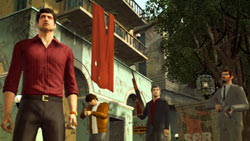
'The Godfather II' game logo
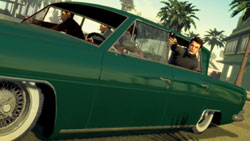
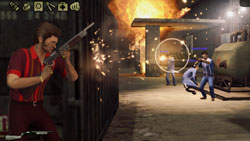
Commanding a crew of three in 'The Godfather II'
Command a crew of three as Dominic Corleone.
View larger.
A view of your family's empire using the Don's View in 'The Godfather II'
Analyze your empire with 'The Don's View' .
View larger.
Open-world gameplay in 'The Godfather II'
Enjoy open-world gameplay.
View larger.
Multiplayer action online in 'The Godfather II'
Take your family online.
View ! larger.
Stor! y
On the eve of the Cuban revolution, a major mob meeting in Havana takes a bloody turn. The Don of your family is killed in Cuba, leaving it to you to take the reigns and lead your battered organization and reestablish the Corleone powerbase in Queens. Success breeds opportunity: after you've proven you have the chops to run a top-tier crime organization, Hyman Roth invites you to expand and support him in South Florida. Do you accept his offer or do you remain loyal to the Corleones? Things get even more complicated when Michael Corleone comes under investigation by a Senate Committee on Organized Crime, and you're tapped to run the Family with support from Tom Hagen. Whatever decisions you make, you must build up your arsenal, command your crew, and establish and maintain power... or face the consequences. Stack your pockets with favors from those in positions of influence as you fight off attacks and strike back at your rivals. As the Godfather there will be a price on y! our head and a target on your back, but don't take it personally. After all, it's only business.

The Don's View
Be a true Don as you coordinate all the action using a 3D world map: survey your turf, place defenses on businesses, analyze crime patterns, identify new illicit rackets, and choose the target of your next attack. As the Don of a family, there are a ton of strategic choices to make in The Godfather 2. Just one example are Monopolies. Monopolies are groupings of rackets that "run" the same criminal activity. Controlling, and defending a monopoly comes with both a monetary bonus and game perk benefits making them key to owning the map, gaining wealth and amassing power. Monopolies can be local to one city or span across the cities. Larger monopolies made up of many targets, spanning multiple cities are obviously more difficult but offer greater rewards. Other in-game rackets include: Fronts - extortable legitimate businesses of the game that ! provide payouts as well as money laundering opportunities; and! Small, Medium and Large Rackets - venues containing an illegal criminal activity and usually disguised as legitimate businesses. These three require various degrees of muscle to defend and keep under your control.

Key Game Features:

  • Build Your Family - Recruit, develop, and promote members of your crime family.
  • Command a Crew - Bring up to three crew members along on jobs, including an arsonist, demolitions expert, safecracker, and more. Command their actions in battle and unleash their specialties on your enemies.
  • The Don's View - Be a true Don as you coordinate all the action using a 3D world map: survey your turf, place defenses on businesses, analyze crime patterns, identify new illicit racket monopolies, and choose the target of your next attack.
  • Blackhand Brutality - Act like a mobster to command respect, intimidating and extorting business owners and rival families with devastating new attacks and ex! ecutions.
  • Bring Your Family Online - Recruit your friends to join your family and take them into battle online to find out who is the Don of Dons.
  • 'It's Only Business' - Relive the greatest moments from The Godfather II in an open-world action experience inspired by the movie.
Commanding Your Crew
There are six ranks within each family, starting with the Don. As the Don you will have a right hand man, your Consigliere Tom Hagen, who will teach you the ropes and advise you on how to take down the other families. The rest of your family is comprised of an Underboss, Capos, Soldiers and Associates. These are the men who guard your interests and follow your orders without question. Members of your family within these ranks, known as Made Men, possess exclusive skills and specialties that can be taken into battle. Direct them wisely and upgrade them to develop their specialties and increase the power of your organization. Bu! t beware. Each rival family has it’s own family tree as well! . Learni ng how to hunt down and permanently eliminate their Made Men will be critical to your success.

Take Your Family Online in Multiplayer Modes
Play The Godfather II online multiplayer modes and become the true Don of Dons. Take your money, weapons, and crew from your singleplayer experience online and wage mob warfare against players around the world. Play as one of your family’s Made Men and put your best strategies to the test as you battle for riches and honors that transfer back and forth between your singleplayer campaign. Some available modes include:

Fire Starter Game Mode - Arsonist crew members attempt to destroy as much as possible in a race to reach the scoring limit.

Safe Cracker Mode - Safe cracker crew members attempt to find safes throughout the map. Cracking them earns your team points and money.

Demolition Assault Mode - Use your demolitions specialty to destroy the enemy’s three assault points.

! Team Deathmatch - The bloodiest mode and so not for the squeamish. Team with most kills wins.


Twitter Delicious Facebook Digg Stumbleupon Favorites More


web log free